About Glaciers
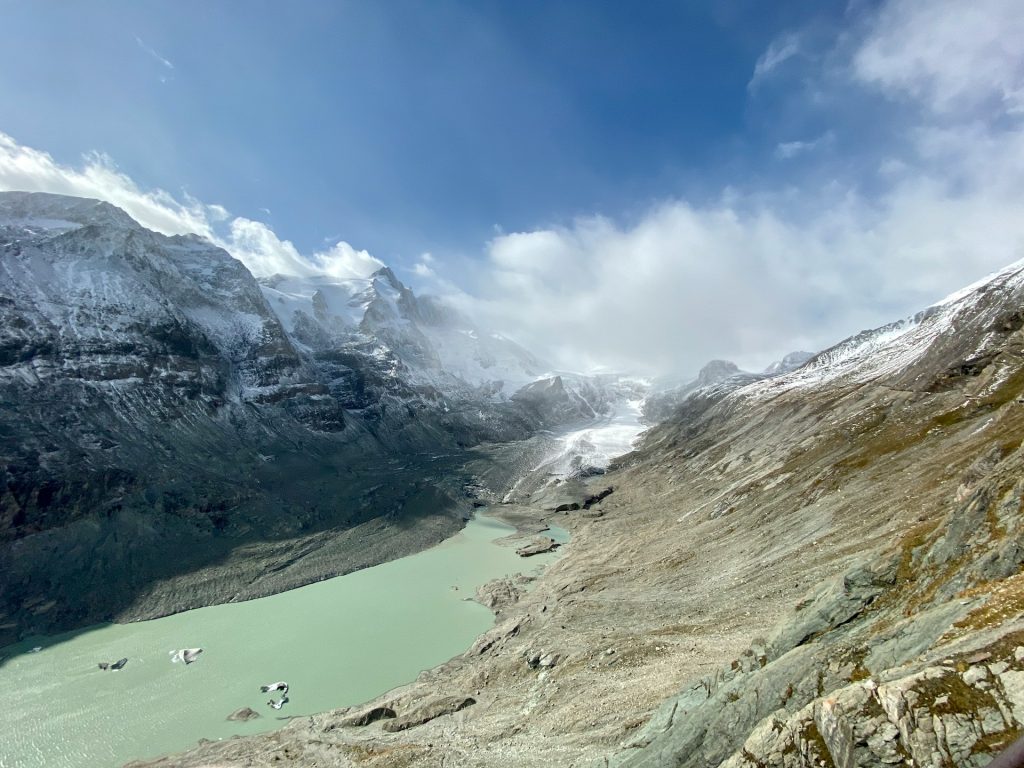
Icy Giants
By Conny Kawohl
Glaciers are large, persistent bodies of ice that form from the accumulation and compaction of snow over long periods of time. They exhibit unique characteristics such as immense size, slow movement, and the ability to reshape landscapes.
Why Are They Called ‘Glaciers’?
The term ‘glacier’ originates from the French word ‘glace’, meaning ice. It reflects the icy nature of these formations and their association with cold environments.
How Do Glaciers Form?
Glaciers form through a process known as glaciation. It begins with the accumulation of snow in regions where more snow falls in winter than melts in summer. Over time, the weight of successive snow layers compresses the lower layers into dense ice, forming glaciers.
Why Are Glaciers Where They Are?
Glaciers are typically found in polar regions and high mountainous areas where temperatures remain cold enough for snow to persist year-round. Factors such as latitude, altitude, and topography influence their distribution.
What Makes Them Interesting Or Special?
Glaciers are fascinating natural phenomena with significant environmental, geological, and cultural importance. They play vital roles in regulating Earth’s climate, shaping landscapes through erosion and deposition, and providing freshwater resources.
How Are They Being Affected By Climate Change?
Glaciers are highly sensitive indicators of climate change. Rising temperatures and changing precipitation patterns have led to widespread glacier retreat and thinning worldwide. This impacts water availability, sea level rise, and ecosystem dynamics.
More Information On Glaciers
For further information on glaciers, you can explore scientific literature, educational resources from research institutions and environmental organizations, and documentaries focused on glaciology and climate change.